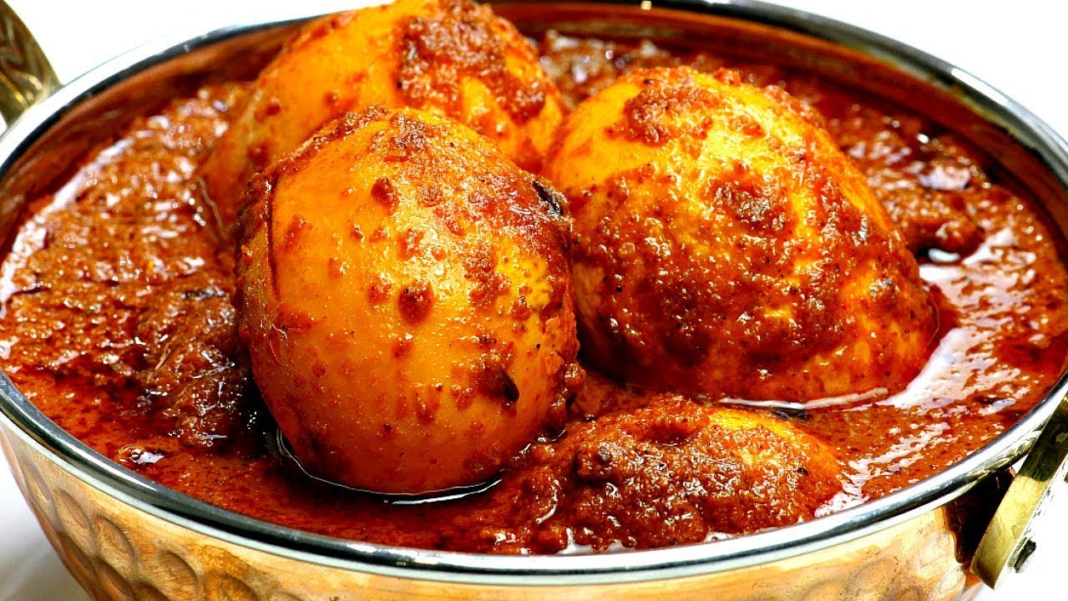

Egg curry is a staple in Indian households because it combines simplicity with a burst of flavors. This dish brings together perfectly boiled eggs in a spiced, aromatic masala that can be served with roti, paratha, naan, or rice. Its versatility makes it suitable for a quick weekday meal or a weekend treat.
The spicy, tangy, and aromatic nature of dhaba-style curry makes it irresistible. With the right balance of spices, it’s a protein-rich meal that fills you up and satisfies your taste buds. Eggs are not just delicious but packed with essential nutrients, making this dish both tasty and healthy.
Ingredients for Perfect Egg Curry
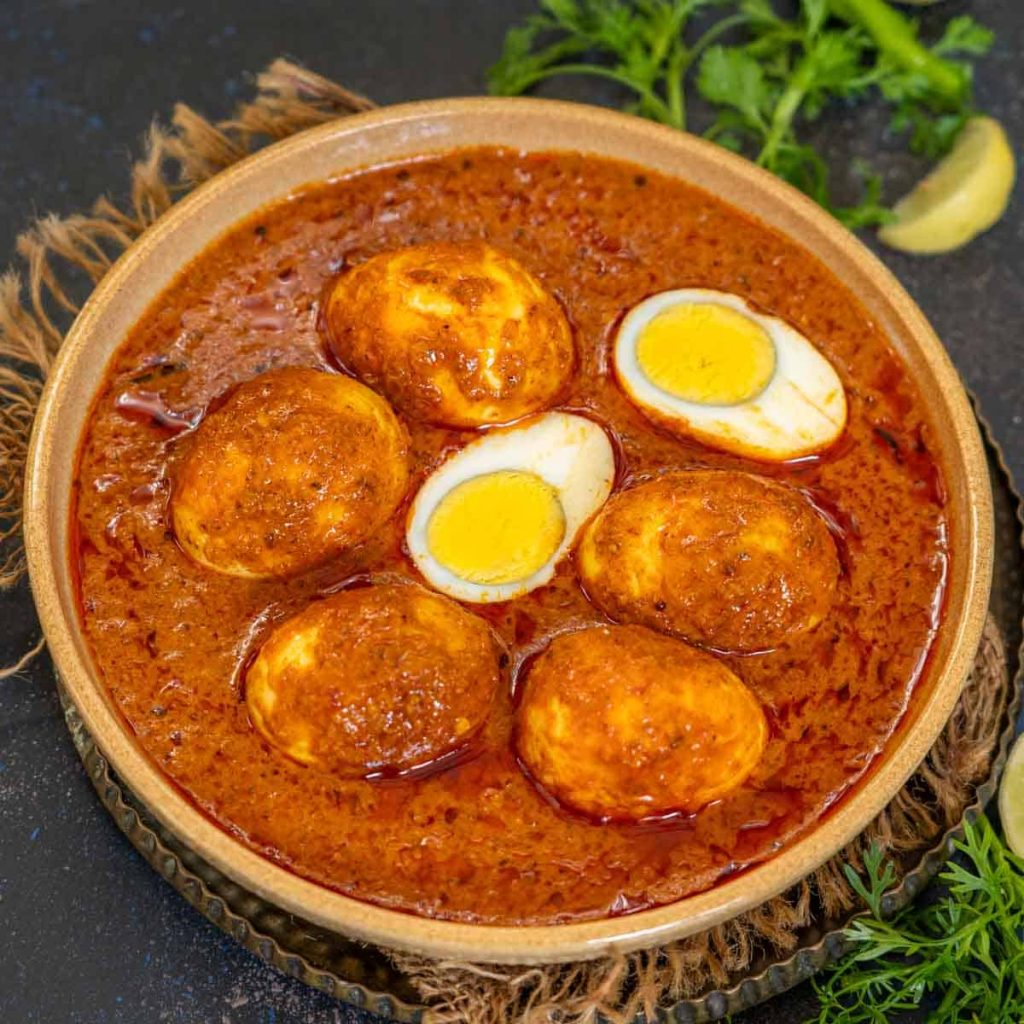
Here’s a detailed list of ingredients with measurements for 4 servings:
Core Ingredients:
- 6 large eggs, boiled and peeled
- 2 medium onions, finely chopped
- 3 medium tomatoes, pureed
- 1 tablespoon ginger-garlic paste
- 2 green chilies, slit (optional)
- 3 tablespoons oil or ghee
- ¼ cup fresh coriander leaves, chopped for garnish
Spices & Flavorings:
- 1 teaspoon cumin seeds
- ½ teaspoon turmeric powder
- 1 teaspoon red chili powder (or Kashmiri chili powder for color)
- 1 teaspoon coriander powder
- 1 teaspoon garam masala
- 1 teaspoon kasuri methi (dried fenugreek leaves)
- Salt to taste
Optional Richness (for creamy version):
- 2 tablespoons cashew paste or ¼ cup cream
- 2 tablespoons yogurt (optional)
Water & Adjustments:
- 1–1.5 cups water for gravy consistency
How to Make Dhaba-Style Egg Curry at Home
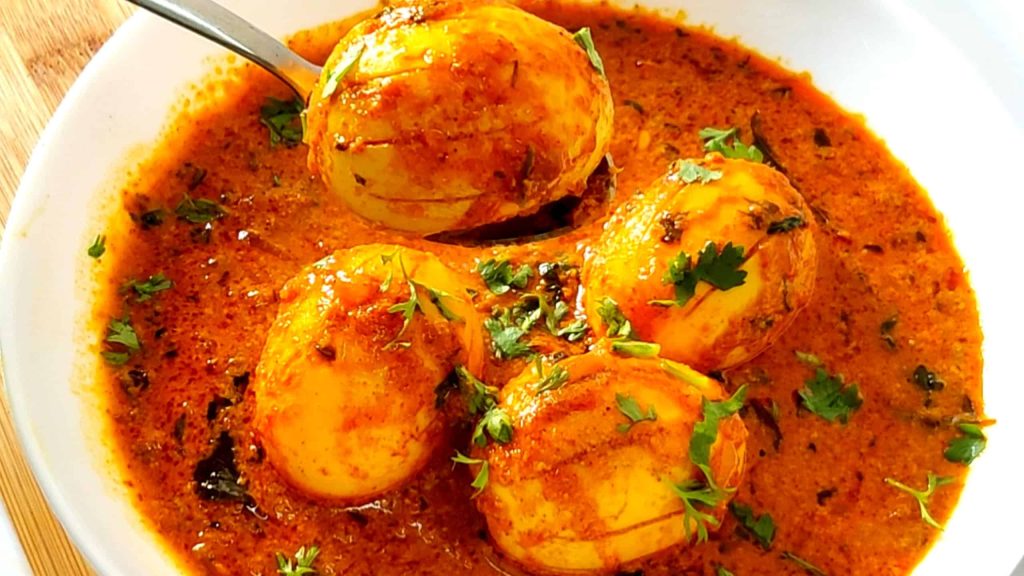
Making a restaurant-style egg curry at home is easier than you think. With simple steps and fresh ingredients, you can recreate the rich flavors of a dhaba right in your kitchen.
Step 1 – Boil and Prep the Eggs
Place 6 eggs in a saucepan with enough water to cover them. Add a pinch of salt and boil on medium heat for 8–10 minutes. Transfer to cold water immediately to stop cooking. Carefully peel the eggs, then prick them lightly with a fork or make small slits so that the masala absorbs better.
Pro Tip: To avoid green rings around the yolk, don’t overboil and cool immediately in ice water.
Step 2 – Prepare the Masala Base
Heat 3 tablespoons of oil or ghee in a pan. Add 1 teaspoon cumin seeds and sauté until fragrant. Add finely chopped onions and cook on medium flame until golden brown. Stir in 1 tablespoon ginger-garlic paste and cook for 1–2 minutes until the raw aroma disappears.
Add the powdered spices: ½ teaspoon turmeric, 1 teaspoon red chili, 1 teaspoon coriander powder. Roast lightly for 1–2 minutes to bring out the flavors. This forms the aromatic base for your restaurant-style curry.
Step 3 – Build the Gravy
Add 3 pureed tomatoes to the masala and cook until the oil separates and the gravy thickens. Pour in 1–1.5 cups of water to reach your preferred consistency. Simmer for 5 minutes to blend the flavors. Taste and adjust salt if needed.
Optional: For a creamy texture, mix in cashew paste, cream, or yogurt at this stage. Stir well to create a smooth, velvety gravy.
Step 4 – Combine Eggs with Gravy
Gently add the boiled eggs into the gravy. Coat them well and simmer on low flame for 5–7 minutes. This allows the eggs to soak the masala, giving you a rich and flavorful Anda masala curry. Avoid stirring too vigorously to keep the eggs intact.
Step 5 – Final Touches & Garnish
Sprinkle 1 teaspoon of kasuri methi and ¼ cup chopped coriander leaves. Add a few slices of green chili for extra color and spice if desired. Serve hot with rotis, parathas, or steamed rice.
Extra Tip: A small knob of butter or a drizzle of cream enhances the richness for a restaurant-style finish.
Chef Tips for Perfect Curry
Cooking the perfect curry may seem simple, but a few small mistakes can affect both flavor and texture. Here are some expert tips to help you get it just right every time:
- Onion cooking: Saute until golden, not burnt, to get natural sweetness.
- Avoid watery curry: Cook tomatoes thoroughly and simmer for a thicker consistency.
- Perfect color: Use Kashmiri red chili powder for a bright, appetizing hue.
- Eggs absorbing masala: Make small slits or prick eggs before simmering.
- Reheating: Warm gently on low heat; avoid overcooking to prevent rubbery eggs.
These tips ensure your restaurant-style egg curry comes out flavorful and visually appealing every time.
Extra Tips for Perfection
- Use fresh ingredients for maximum flavor.
- Avoid using old eggs, as they may absorb flavors differently.
- Garnish with fresh coriander and a drizzle of cream for a visually appealing, restaurant-style finish.
Following these tips will ensure your spicy curry is consistently flavorful, aromatic, and visually appealing every time you cook it. Even simple adjustments can make a big difference in taste and presentation.
Variations You Can Try Beyond Traditional Dhaba Egg Curry
The classic dhaba-style egg curry is always a favorite, but you can try a few variations to make it even more exciting. For a richer and creamier version, blend roasted cashews into a smooth paste and stir it into the gravy. You can also add a splash of cream or coconut milk to make the curry mild and velvety. This indulgent version goes perfectly with buttery naan or fluffy basmati rice.
If you prefer a lighter option, a low-oil or low-fat egg curry works just as well. Skip the cream and use minimal oil for sautéing. Cook the onions and tomatoes slowly to bring out their natural sweetness. Aromatic spices add flavour without extra fat, keeping the curry healthy while still tasting delicious.
You can also explore regional twists to give your egg curry a unique flavor. A South Indian-style version often uses coconut milk and curry leaves for a fragrant, subtle taste. On the other hand, the Bengali-style egg curry, called dimer jhol, uses mustard oil and a hint of sweetness for a distinct balance. For convenience, you can even make any version in a pressure cooker or instant pot, which saves time while keeping the flavors authentic.
By experimenting with these variations, you can customize your dhaba-style egg curry for different palates, occasions, or mealtimes. Each version preserves the essence of the classic dish while adding a new twist, keeping your meals interesting and satisfying every time.
What to Serve With Egg Curry
Pair your dhaba-style curry with these sides for a complete and satisfying meal:
- Indian Breads: Rotis, parathas, naan, or lachha paratha are perfect for scooping up the thick, flavorful gravy. Buttered versions add extra richness.
- Rice: Steamed basmati rice or jeera rice balance the spices and soak up the masala beautifully. You can also serve it with ghee rice for added aroma.
- Fresh Sides: Cucumber-tomato salad, onion-tomato salad, or a simple carrot and cucumber mix adds crunch and freshness to the meal.
- Cooling Options: Plain yogurt, cucumber raita, or boondi raita help tone down the heat of the curry and add a creamy contrast.
- Garnish: Fresh coriander leaves, thin slices of green chili, or a drizzle of cream or ghee enhance both flavor and presentation.
- Optional Extras: Pickles, papad, or a wedge of lemon on the side can add tanginess and extra flavor.
This combination ensures your meal is well-balanced, flavorful, and visually appealing. It also allows everyone to enjoy the curry in their preferred way—whether with bread, rice, or cooling sides.
Nutrition & Health Benefits of Egg Curry
Eggs are a powerhouse of nutrition. They provide high-quality protein that supports muscle growth and keeps you full longer. They are also rich in essential vitamins like B12, which supports brain health, and vitamin D, which strengthens bones. Minerals such as selenium, phosphorus, and iron help boost immunity and overall wellbeing.
The spices in egg curry—like turmeric, coriander, and cumin—not only add flavor but also offer antioxidants and anti-inflammatory benefits. Turmeric contains curcumin, which supports heart and joint health, while cumin and coriander aid digestion.
Cooking the curry with minimal oil and pairing it with whole grains such as brown rice or whole wheat roti makes it a balanced, wholesome meal. Adding fresh herbs or vegetables increases fiber and nutrients, making the dish even healthier.
With its combination of protein, vitamins, minerals, and digestive spices, egg curry is a filling, nutritious, and satisfying meal suitable for any diet, whether for lunch, dinner, or even a hearty breakfast.
Wrapping Up
This egg curry brings the authentic flavors of a dhaba-style restaurant to your home. Tender boiled eggs coated in aromatic masala, combined with a rich, spicy gravy, make every meal satisfying. Its versatility allows for creamy, light, or regional variations, fitting every taste preference.
Pair it with rotis, parathas, or rice for a wholesome meal that is both nutritious and indulgent. With simple steps, aromatic spices, and practical tips, this dish is perfect for quick dinners or special feasts. Try it today, experiment with variations, and make this Indian egg curry a regular favorite in your kitchen.
Frequently Asked Questions (FAQs)
Q1. Can I make egg curry in advance?
Yes! You can prepare the gravy ahead of time and store it in the refrigerator for 2–3 days. Add freshly boiled eggs just before serving to keep them tender and avoid overcooking.
Q2. How can I prevent eggs from cracking while boiling?
Add a pinch of salt to the water and boil the eggs on medium heat. Once cooked, immediately transfer them to cold water. This stops further cooking and makes peeling easier.
Q3. Can I make egg curry without onions or garlic?
Absolutely! You can substitute tomato puree, bell peppers, and a pinch of asafoetida (hing) for flavour. The curry will still be tasty and aromatic.
Q4. How can I make my curry spicier or milder?
Adjust the amount of chilli powder or green chillies according to your taste. For a milder curry, use Kashmiri chilli powder for colour without too much heat.